When art cuts through reflection with mirror canvas
Since 2011, Danish artist Jeppe Hein has explored the boundary between image, space and perception through a series of works titled Mirror Cuts, in which he uses an unusual material in the contemporary art world: Like Mirror’s Mirolege mirror canvas.
Originally designed for architecture, scenography or design, the Mirolege stretch mirror canvas becomes, in the artist’s hands, a surface that is both fragile and sculptural, transformed by a simple gesture: a clean, deliberate incision with a cutter that profoundly modifies the mirror’s function.
Works between two dimensions: the Mirror Cuts
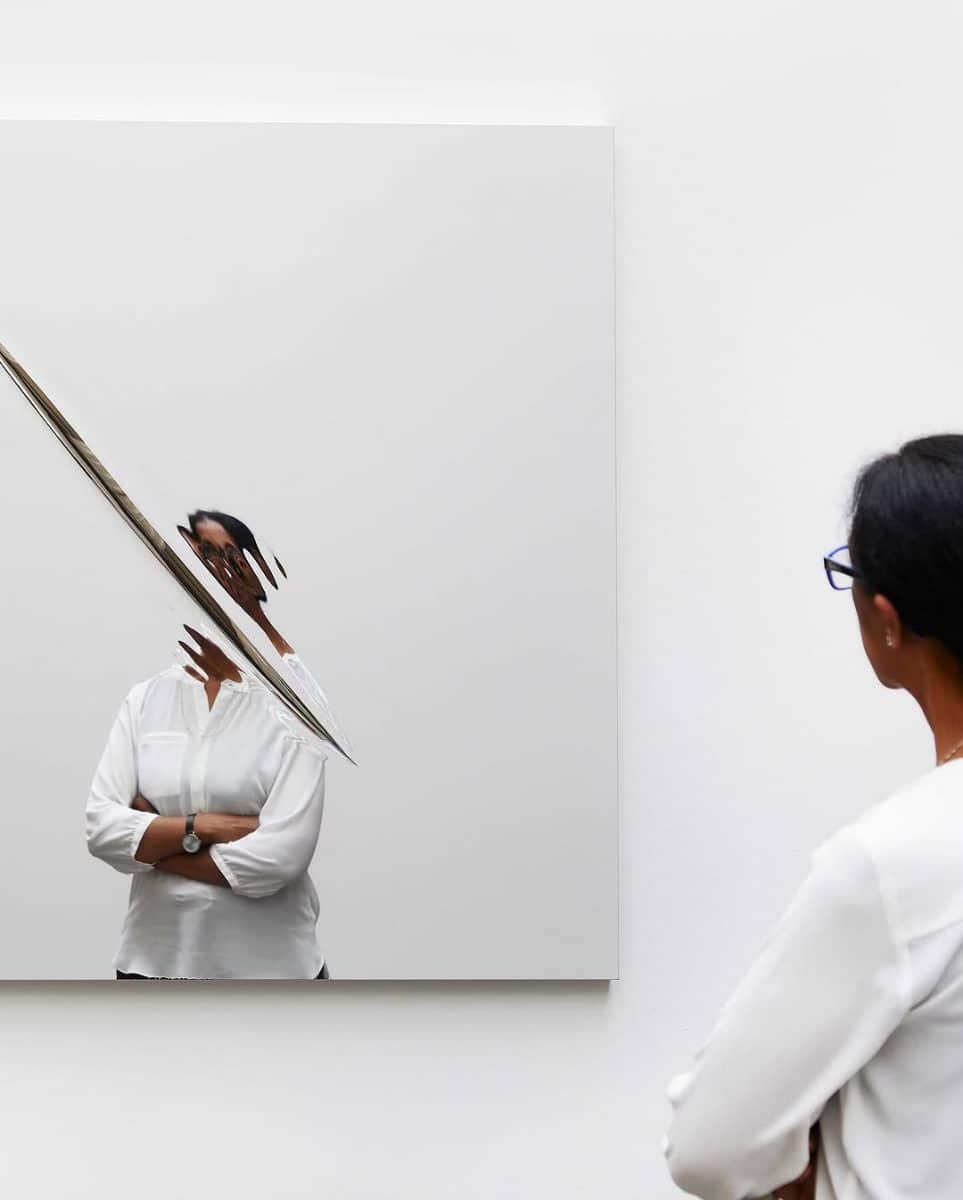
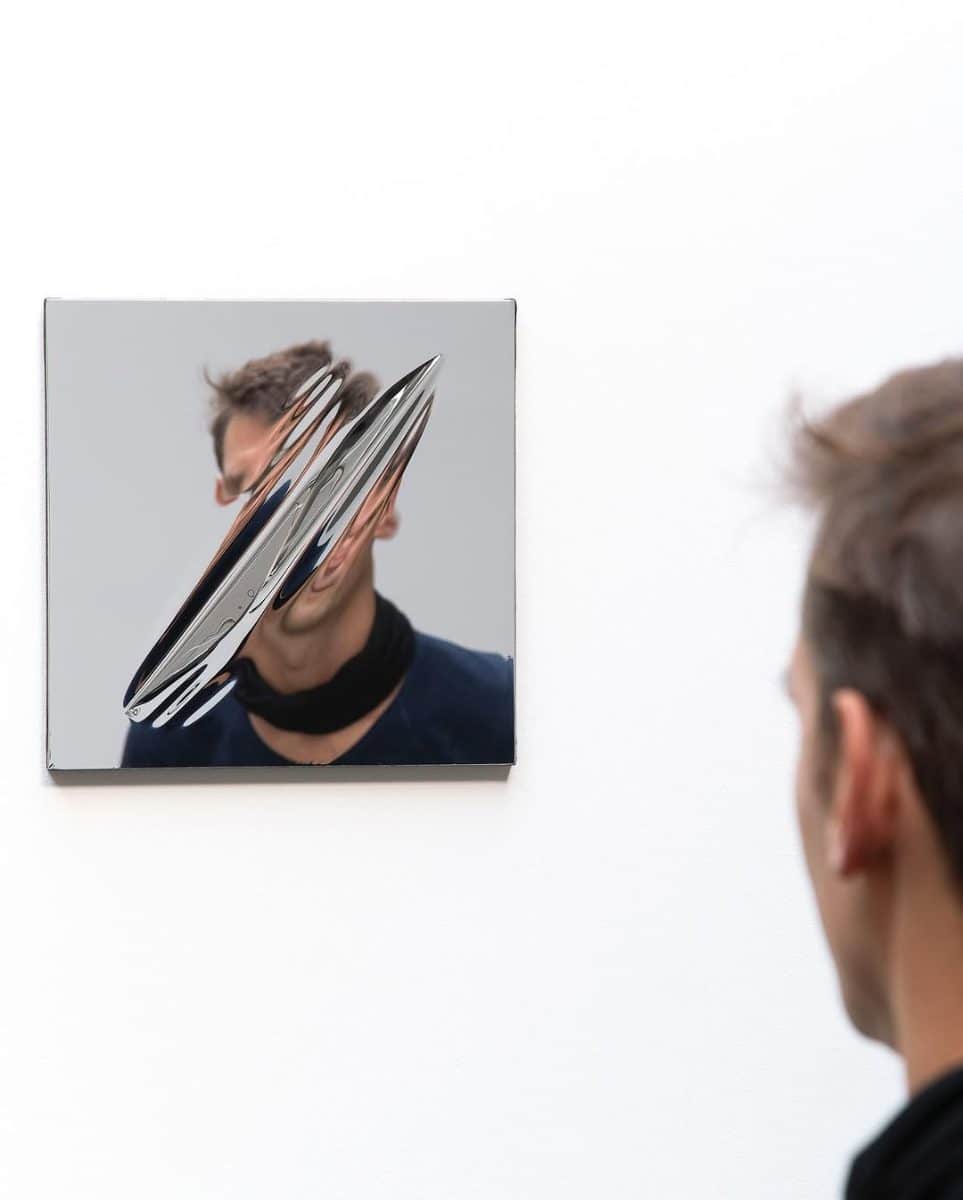
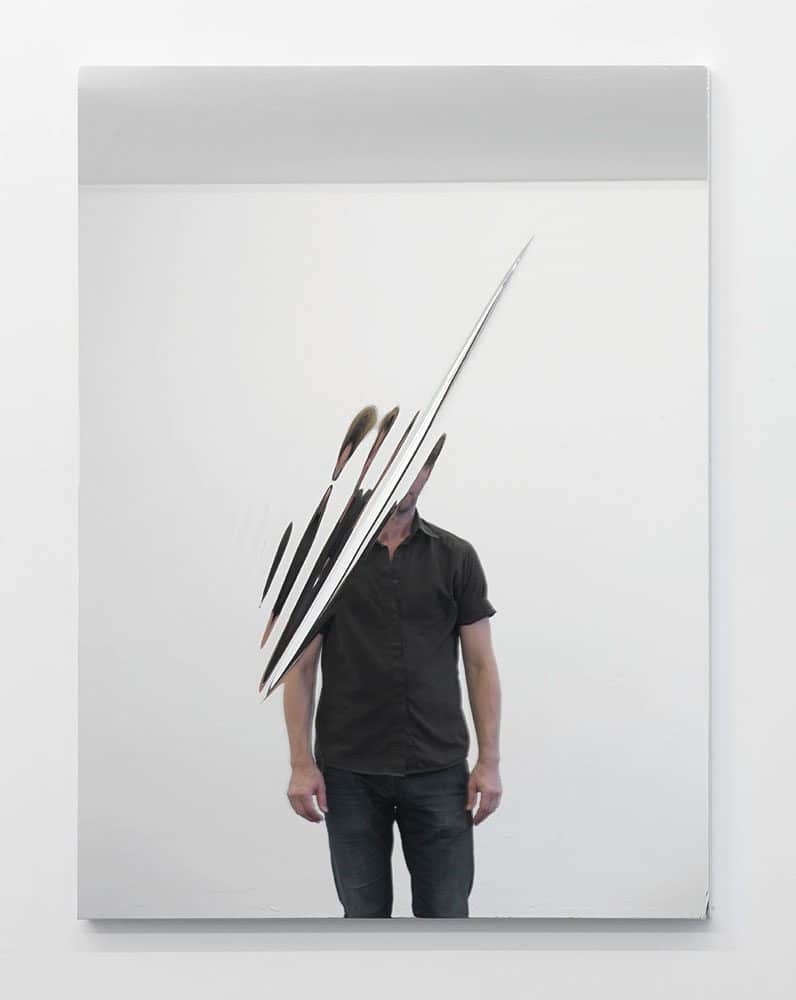
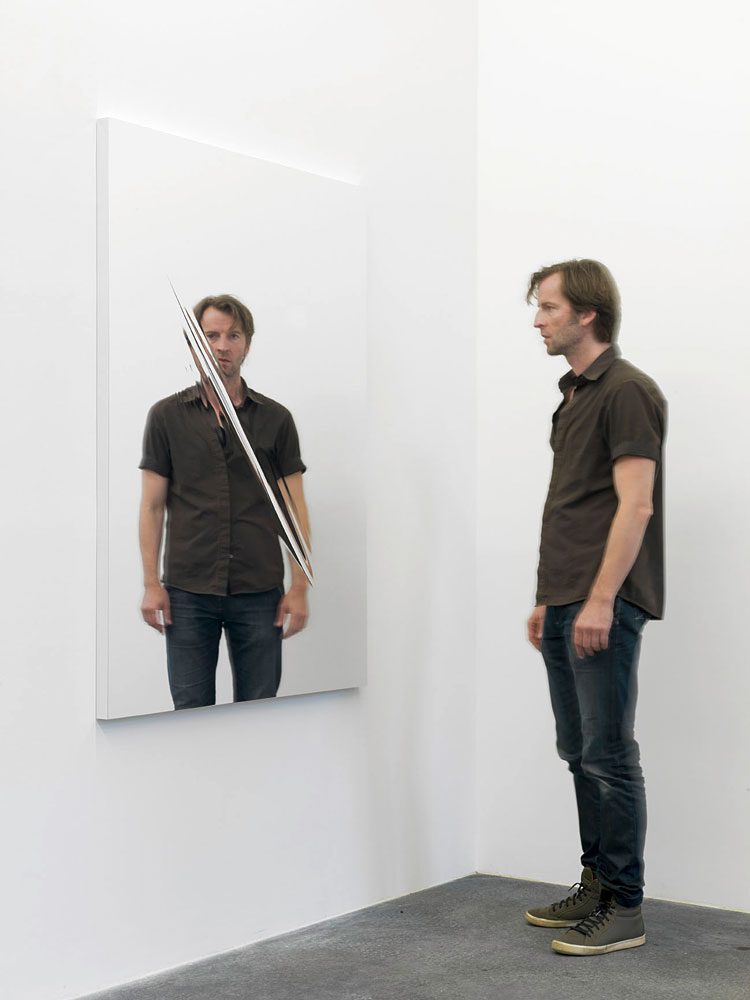
In pieces like Mirror Canvas (2011) or My Mirror (2020), Jeppe Hein uses Mirolege, mirror canvas stretched on an aluminum frame as a pictorial support. But instead of painting or projecting an image on it, he incises the surface with a blade, in the manner of Lucio Fontana and his famous “Concetti Spaziali” series.
The mirror, an object of pure reflection, then becomes an object of depth: the cut reveals the material’s tension, makes the surface undulate around the slit, and offers a glimpse of the frame’s hidden space. The work no longer just reflects the outside world, it interrupts it, tears it, invites it to penetrate a new space, between the visible and the sculptural.
Mirolege mirror canvas, a support for exploration
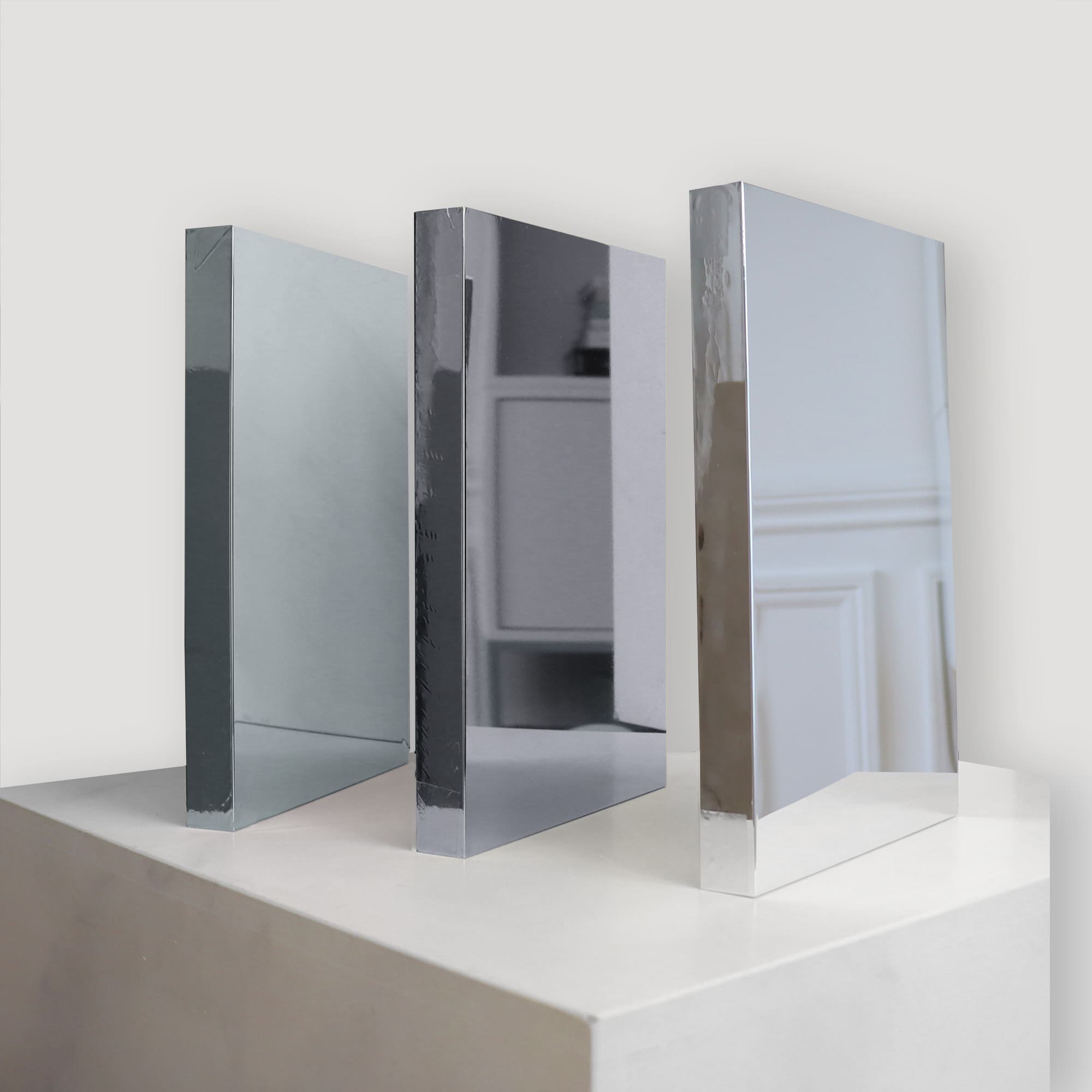
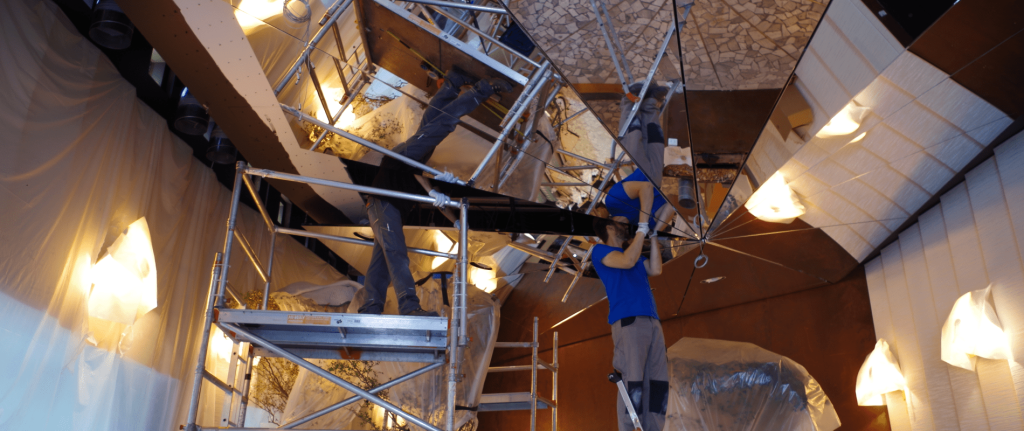
To create these works, Jeppe Hein uses Mirolege mirror canvases mounted on aluminum frames, the same ones that Like Mirror develops for architectural or scenographic installations.
Light, flexible but resistant, the mirror canvas allows precise cuts, which naturally deform under the frame’s tension, creating that vibrant and destabilized surface effect so characteristic of the series.
Unlike a glass mirror, the material physically reacts to the artist’s intervention: it folds, tightens, opens subtly, extending the artistic act through time and form.
The art of the mirror revisited
Jeppe Hein’s works poetically question our relationship to reflection, frame and self-image. They pose a simple but essential question: what happens when we break the reflective surface?
By using the Mirolege mirror as the main material, the artist demonstrates that technical innovation can also be a source of new forms of expression, where the mirror is no longer just a functional tool, but a vector of emotion, space and questioning.
A work in perpetual reflection
Through Mirror Cuts, Jeppe Hein places Like Mirror mirrors in the field of contemporary art, showing that our mirror canvases can also become surfaces for radical creation, diverted from their initial use to reveal all their complexity.
A mirror is never neutral. And when it is sliced, it opens a breach in reality – an invitation to look differently.